Kyushu-Ha english
▪️Chronology of Kyushu-Ha
Kyushu-Ha Chronology ➡️︎ Detail
▪️About Kyushu-Ha
From the late 1950s and early 60s, changes in the art world began to take place both nationally and internationally and a wide variety of art appeared. Around this time various Avant-garde groups were founded in Japan; not only in Tokyo, but various other cities as well.
Young artists dissatisfied with the traditional art system formed a new group and started releasing energetic, experimental works that couldn’t fit into such categories as “painting“ or “sculpting“.
The “Neo Dada“ in Tokyo and the “Gutai“ in Kansai are representative of that time, but above all the “Kyushu-Ha” formed in Fukuoka City is one of the most distinctive groups of that time. “Kyushu-Ha” was formed by Takami Sakuraiand Ochi Osamu and it can be said that their characteristic is the approach of looking at artistic expression and everyday activities from the perspective of an ordinary person. In other words, art is brought down to daily reality, and conversly, everyday coarseness is raised to the level of artistic expression.
Most members of Kyushu-Ha did not receive a special art education, which is why they were strongly aware of being „ordinary civilians (workers)“, when among „painters“. At the same time the labor union movement represented by Mitsui Miike was on the rise in Fukuoka Prefecture and it seems that their ideology resonated with members of Kyushu-Ha.
The Kyushu-Ha artists used scrap wood and waste, but their most characteristic material is Asphalt. Ochi Osamu discovered this method while working at a publishing company and almost all members of Kyushu-Ha used it. Asphalt was easy to obtain in Fukuoka city, where urbanisation began to advance because it was cheap. Moreover, it had a unique luster and dried quickly. The shiny black colour was associated with Miike’s coal and the energy of workers, who supported the modernisation of Japan, which is why this material became a Kyushu-Ha trademark.
In the beginning of their formation Kyushu-Ha tried to call attention to their existence by frequently holding exhibitions in Tokyo and by holding independent exhibitions to reorganise the local art scene. However, due to the difference in awareness of “Avant-garde” the group experienced a major division at the end of 1959.
Eventhough Sakurai tried to rebuild Kyushu-Ha, due to the ideological background being established on Mitsui Miike’s labor dispute, with the defeat of the union in 1960, Kyushu-Ha itself also lost its energy, and lastly ended their activities by participating in a group exhibition in 1968.
Kyushu-Ha placed more emphasis on the effect and degree of appeal of their work rather than the preservation; there are many works that take the form of actions rather than a solid shape, which is why there are very few still existing art works. Due to this, Kyushu-Ha had been conceiled by a legendary veil for a long time.
In 1988, the “Kyushu-Ha One Anti-Art Project” was held at the Fukuoka Art Museum, and the full story was made public. The “Kyushu-Ha Taizen“ edited by the same museum was published in 2015 and Kyushu-Ha started gathering attention worldwide
”Excerpt from “Kyushu-ha Daizen” a miraculous avant-garde art group born in postwar Fukuoka”
■ From the comments of experts
【Ichiro Hariu】
Of all the groups that emerged in Japan after World War II, none has evoked the energy of a hot magma erupting from a deep stratum of earth like Kyushu-Ha.
【Yasunao Tone】Gutai and Kyushu-Ha art movements from the Unformel to the end of the Yomiuri Independents were unprecedented in the history of modern art, with local artists playing the sharpest edge in the art world.
【BIJUTSU TECHO October 1971】
Kyushu-Ha is one of the few groups that have sought a theory of organization and a theory of movement, that have taken expression from within the living world, and that have made the idea of expression and the independence of the artist an issue.
【NISHINIPPON SHINBUN】
The members of Kyushu-Ha, who disguise themselves as incorrigible and unintellectuals, are in fact very studious people.
Kyushu-Ha was born at the crossroads of diverse streams of art, politics, and thought, including contemporary art, a society in turmoil, and existentialism, all freed from the oppression of war.
【NISHINIPPON SHINBUN】
At first, Kyushu-Ha borrowed Western contemporary art, such as Abstract Expressionist informel and action painting, as his costume.
However, it is clear that Kyushu-Ha was not merely imitating, but was also pursuing its own unique self-expression in terms of such materials.
Furthermore, by parodying the idea that “art is trash” and using everyday tools and materials from the periphery of life, it was an embodiment of the “sei-katsu-sha idea” that brought art, which had been thought of as lofty and high-minded and out of reach of the masses, down to the level of the sei-katsu-sha.
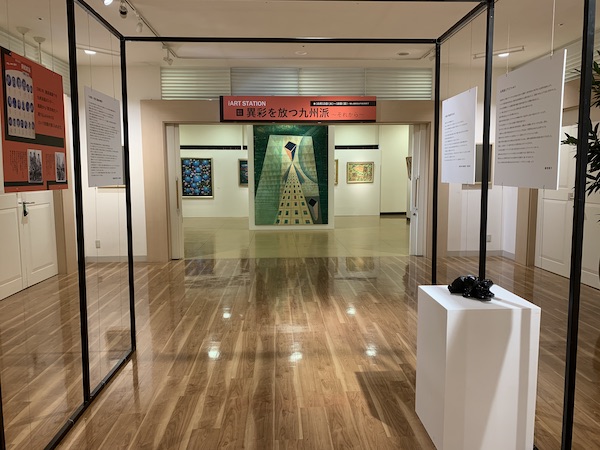
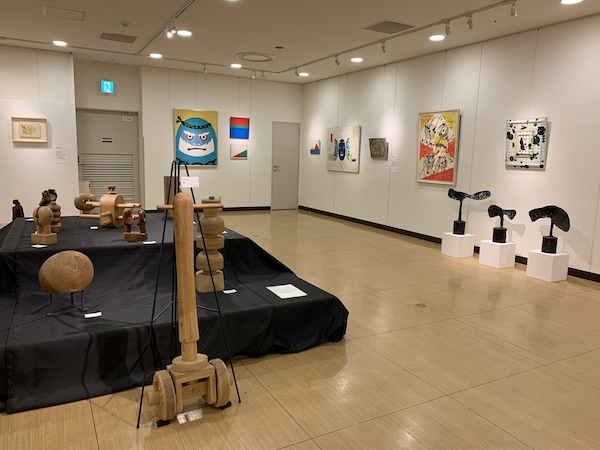
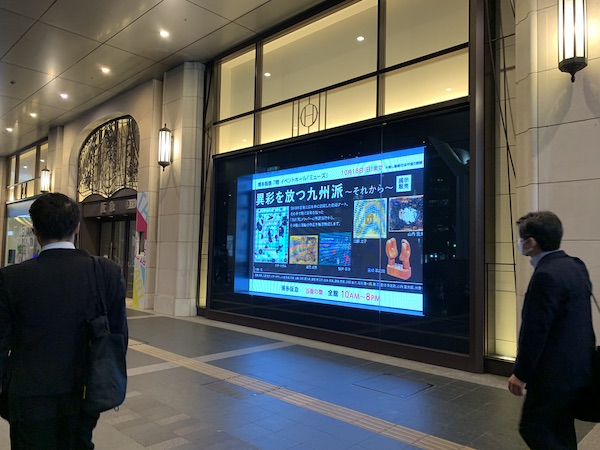
Hakata Hankyu September 2020 Kyushu-Ha – Then and There – You can see it in VR video.→VR view
We can say that we are now at the beginning of an art movement.
We have given our art movement the name “Kyushu-Ha,” but this is merely a regional description of the place where we create our art.
Our fundamental attitude is to explore the possibilities of art to the fullest extent, without any preconceived notions.
From contemporary science and society to ethnicity and individuality, and from a methodological standpoint as well, there is a mountain of issues that we must confront through art, such as realism, abstract, and en formant.
What we at the Kyushu-Ha aim to do is to tackle and solve these problems, and to create truly unique art of our own.
(Kyushu-Ha Bulletin #1)
1957
the avant-garde art group “KyushuーHa” suddenly appeared in Fukuoka, Kyushu.
They were anti-art, anti-central, and anti-public exhibitions.
Asphalt and coal tar
be used instead of paint.
They are developing a movement with a novel and powerful appeal.
to break down the stagnation of modern society through the power of art.
We will also use our contemporary information tools to communicate the subsequent art activities of Kyushu-Ha and its members both at home and abroad.
Kyushu-Ha exhibition
October 13 – October 18, 2020
Hakata Hankyu 8F
Online Exhibition Page VR
■ Text
Kyushu-Ha Journal
#1 Kyushu-Ha ➡️︎ Detail
Kyusyu-Ha 「Blue House」 ➡️︎ Detail
Ichiro Haryu : The Whole Story of Kyushu-Ha ➡️︎ Detail
Takami Sakurai : Introduction to Kyushu-Ha ➡️︎ Detail
Takami Sakurai : Taking the World Art World – A Report from the Circuit ➡️︎ Detail
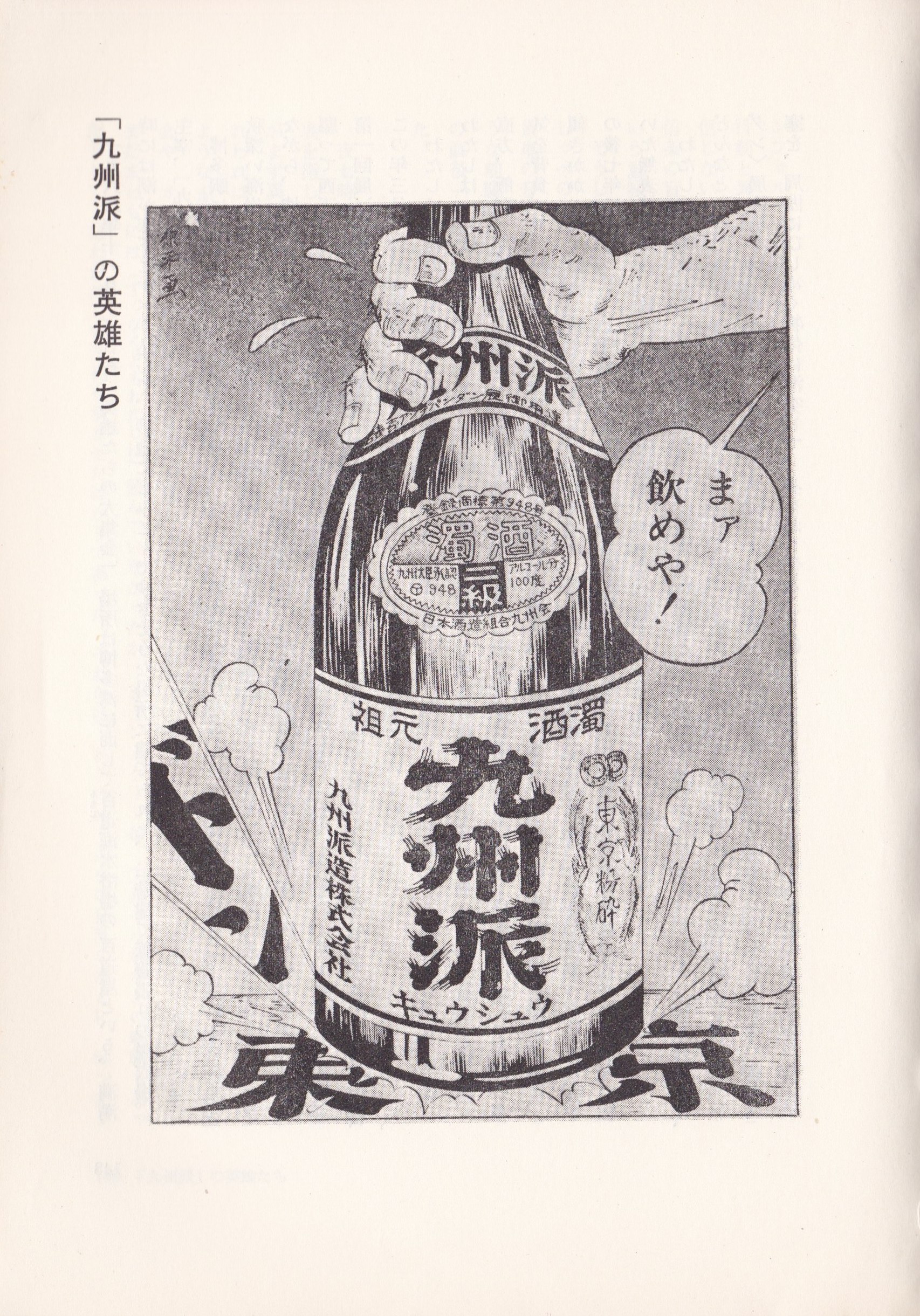
Takami Sakurai : Heroes of Kyushu-Ha ➡️︎ Detail #1・ ➡️︎ Detail #2・ ➡️︎ Detail #3・ ➡️︎ Detail #4・ ➡️︎ Detail #5・ ➡️︎ Detail #6・ ➡️︎ Detail #7
Jutaro Yamauchi : Kyushu-Ha Personal Records ➡️︎ Detail
Jutaro Yamauchi : Kyushu-ha Memorandum ➡️︎ Detail
Jutaro Yamauchi : A Personal History of Kyushu-Ha ➡️︎ Detail #1・ ➡️︎ Detail #2・ ➡️︎ Detail #3・ ➡️︎ Detail #4・ ➡️︎ Detail #5
Kojin TanakaAbout : “Kyushu-Ha Kojin Tanaka ➡️︎ Detail
Hiroshi Minamishima : “Kyushu-Ha Exhibition” Hiroshi Minamishima (Former Director, Contemporary Art Museum, Kumamoto ) ➡️︎ Detail
Yasunao Tone : early 60’s in Japan Excerpt from Bijutsu Techo 1971.10, Yasunao Tone ➡️︎ Detail
Words of Kyushu-Ha ➡️︎ Detail
The Shocking Avant-Garde Art of the “Kyushu-Ha” ➡️︎ Detail
■ Article
Nikkei news paper 3rd May 2020 What is Kyushu-Ha?(1)article ➡️︎ Detail
Nikkei news paper 10th May 2020 What is Kyushu-Ha?(2)article ➡️︎ Detail
Nishinippon Shinbun Trajectory of the Avant-gardeSeptember 26 – October 8, 1988 #Takami Sakurai・#Yasuyuki Ishibashi・#Junnosuke Miyazaki
The Fighting Mikoshi that Ran Through Tatsuo Ikeda ➡️︎ Detail
■Website
The movements that shaped Japanese post-war art CHRISTIES ➡️︎ Detail
WIKIPEDIA ENGLISH ➡️︎ Detail
ASIA ART ARCHIVE ➡️︎ Detail